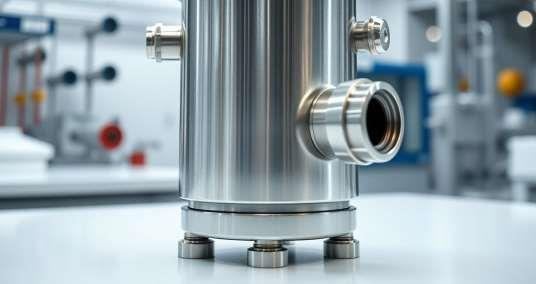
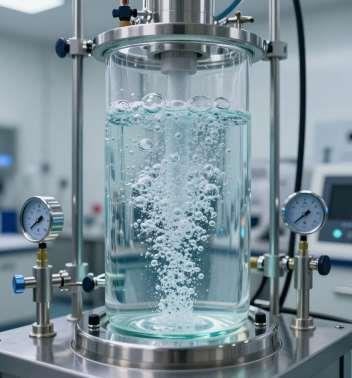
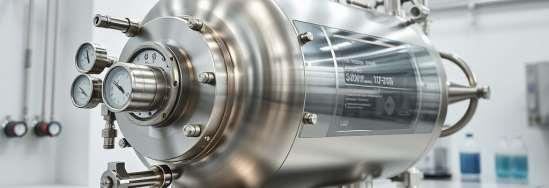
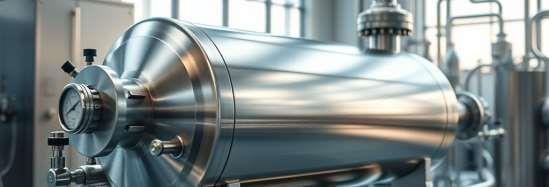
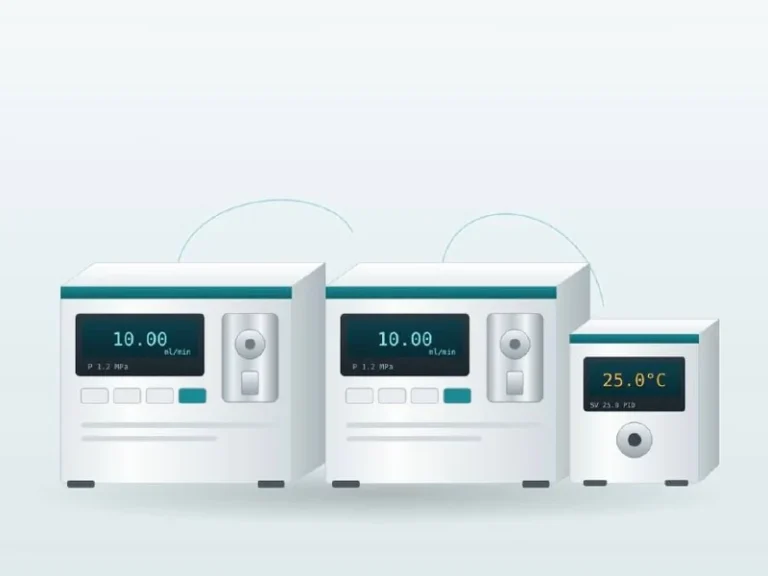
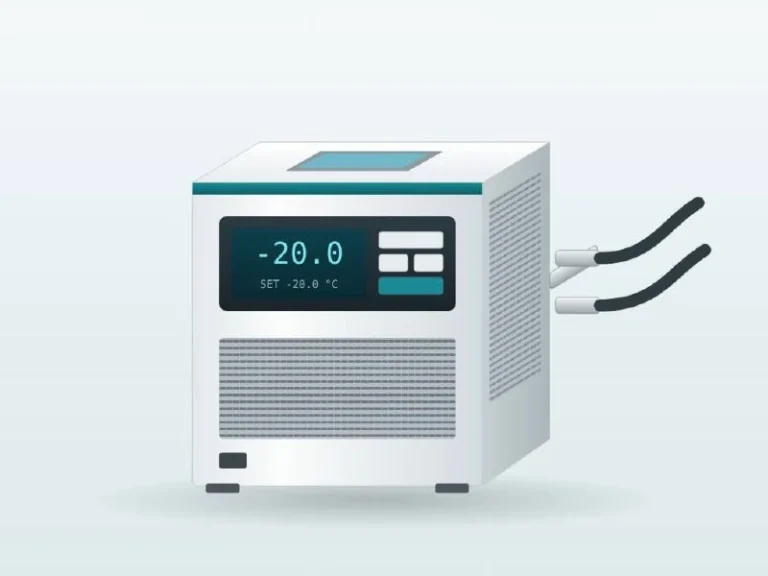
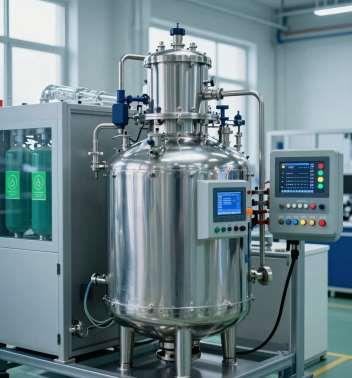
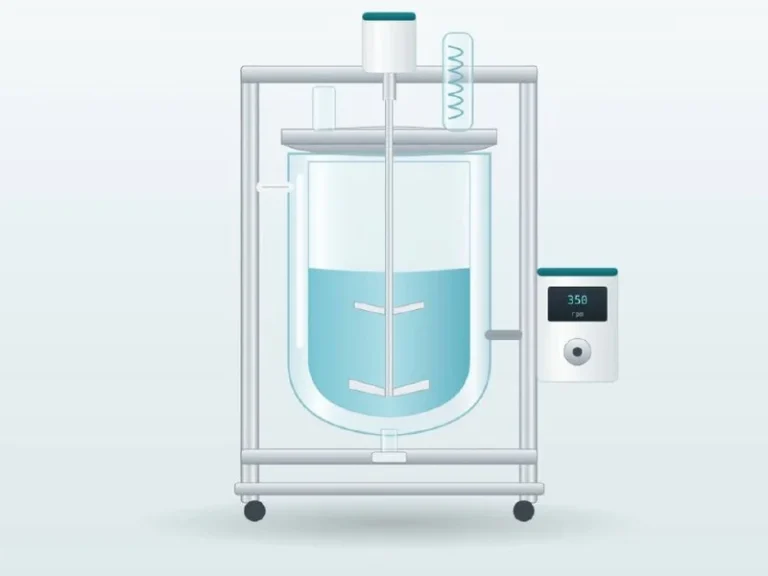
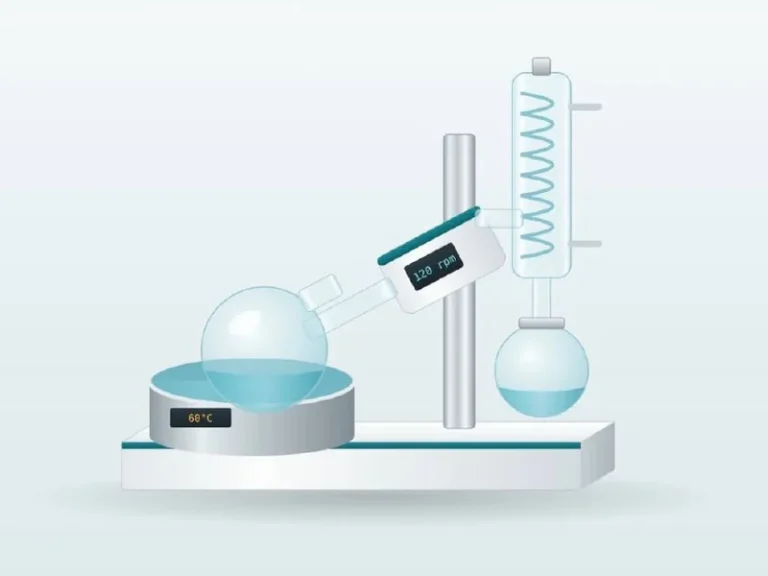
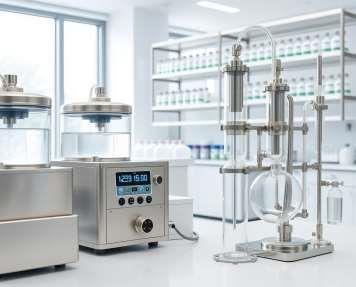
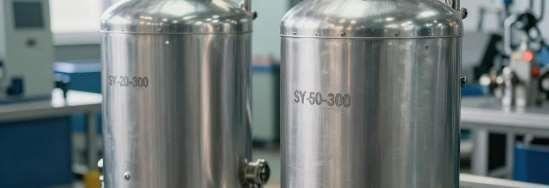
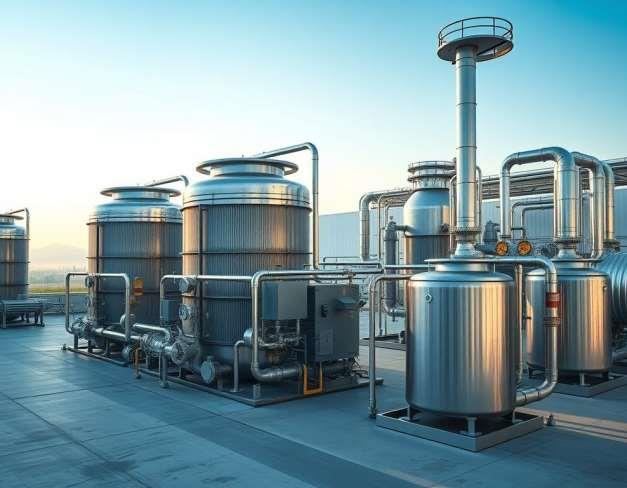
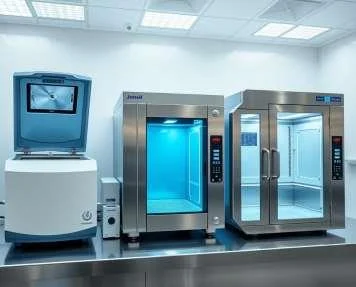
For each equipment item we have matched substances from both catalogs that are used with it, and explained why each one is offered.
The selection is for guidance only. Process conditions and the compatibility of materials with a specific medium must be confirmed by a technical specialist.
Flow reactors
Microchannel and tubular reactors, fixed-bed reactors, mixers and pumps for flow lines, together with matched chemicals and catalysts.
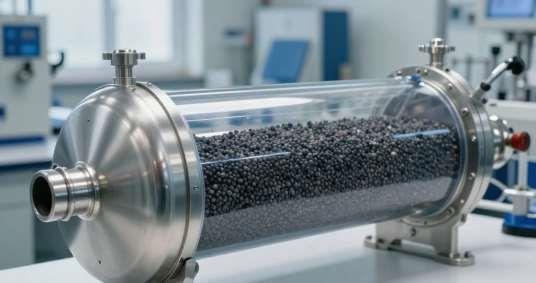
FlowChem dynamic tubular reactor for hydrogenation
- Models
- FlowChem
- Specifications
- Pd/C, Pt/C, Ru/C catalysts in the bed; continuous hydrogenation, uniform phase contact
Matched substances 11
-
Pd/C
Why: Main catalyst: nitro → amine, dehalogenation, aromatic aldehydes and ketones (reactions No. 4, 13, 16, 23 in the catalyst matrix)
-
Pt/C
Why: Nitriles → primary amines, imines, olefins (reactions No. 15, 18, 23 in the catalyst matrix)
-
Pt-Pd/C
Why: Selective hydrogenation of acetylene and of aromatic nitriles to dibenzylamine
-
Ru/C
Why: Saturation of aromatics; aliphatic aldehydes and ketones → alcohols (reactions No. 1, 3, 35 in the catalyst matrix)
-
2-(((4-Nitrophenyl)sulfonyl)oxy)ethyl isobutyrate
C12H15NO7S · CAS 1354282-08-8
Why: The nitro group is hydrogenated to an amino group over Pd/C or Pt/C (reaction No. 23 in the catalyst matrix)
-
3-(Cyanomethyl)benzoic acid
C9H7NO2 · CAS 5689-33-8
Why: Nitrile → 2-arylethylamine over Pt/C or Pd/C (reaction No. 18 in the catalyst matrix)
-
Methyl 3-(cyanomethyl)benzoate
C10H9NO2 · CAS 68432-92-8
Why: Nitrile → primary amine; the ester group is retained
-
Terephthalaldehyde
C8H6O2 · CAS 623-27-8
Why: Aldehyde groups → 1,4-benzenedimethanol over Pd/C (reaction No. 5 in the catalyst matrix)
-
2-(3-Benzoylphenyl)propionitrile
C16H13NO · CAS 42872-30-0
Why: Reduction of the benzoyl group to an alcohol over Pd/C (reaction No. 16 in the catalyst matrix)
-
5-Deoxy-L-ribose phenylhydrazone
C11H16N2O3 · CAS 123168-30-9
Why: Hydrogenation of the hydrazone over Pd/C or Pt/C (reaction No. 14 in the catalyst matrix)
-
Triethylamine
C6H15N · CAS 121-44-8
Why: Base and acid acceptor in C–Hal hydrogenolysis (reaction No. 13 in the catalyst matrix)
BM PX S1010 microchannel reactor
- Models
- BM PX S1010
- Specifications
- 10 mL · up to 4 MPa · −20…200 °C · C-276 alloy
Matched substances 7
BM RSI C1009 silicon carbide reactor
- Models
- BM RSI C1009
- Specifications
- SiC · −15…180 °C · up to 1.8 MPa · resistant to aggressive media
Matched substances 8
-
Hexachlorocyclotriphosphazene
Cl6N3P3 · CAS 940-71-6
Why: Substitution of Cl in the phosphazene with phenoxides, releasing HCl. This route yields flame retardants such as hexakis(4-isopropenylphenoxy)cyclotriphosphazene
-
Hexakis(4-isopropenylphenoxy)cyclotriphosphazene
C54H54N3O6P3
Why: Target product of replacing the chlorine atoms of hexachlorocyclotriphosphazene with 4-isopropenylphenol
-
5-Bromo-2-chlorobenzoic acid
C7H4BrClO2 · CAS 21739-92-4
Why: Conversion to the acid chloride and Friedel-Crafts acylation (route to (5-bromo-2-chlorophenyl)(4-ethoxyphenyl)methanone), in an acidic medium
-
(5-Bromo-2-chlorophenyl)(4-ethoxyphenyl)methanone
C15H12BrClO2 · CAS 461432-22-4
Why: Acylation product, a key intermediate of dapagliflozin
-
Hydrochloric acid
HCl · CAS 7647-01-0
Why: SiC withstands hot hydrochloric acid: hydrolysis, etching, salt preparation
-
Liquid chlorine
Cl2 · CAS 7782-50-5
Why: Chlorination in an aggressive medium without reactor corrosion
-
Sodium hypochlorite
NaClO · CAS 7681-52-9
Why: Oxidation with hypochlorite, including biphasic oxidation
-
Hydrogen peroxide 27.5%
H2O2 · CAS 7722-84-1
Why: Oxidation with peroxide: SiC does not catalyze its decomposition
VXHSS1050 Star Mixer
- Models
- VXHSS1050
- Specifications
- 316L · −20…180 °C · up to 4 MPa · 9–36 L/h
Matched substances 9
Highly flammable amines (flammable liquids, Category 2) require explosion-proof equipment.
BPT6SC0030 microchannel reactor
- Models
- BPT6SC0030
- Specifications
- 316L · up to 5 MPa · −20…200 °C · 30 mL
Matched substances 8
-
Monoethylamine
C2H7N · CAS 75-04-7
Explosion-proof equipment required Why: Boils at 17 °C. Under pressure it stays liquid, so amination can run with heating
-
Isopropylamine
C3H9N · CAS 75-31-0
Explosion-proof equipment required Why: A volatile amine; pressure keeps it in solution
-
n-Butylamine
C4H11N · CAS 109-73-9
Explosion-proof equipment required Why: Amination of alkyl and aryl halides
-
4,6-Dichloropyrimidine-5-carbaldehyde
C5H2Cl2N2O · CAS 5305-40-8
Why: Substitution of chlorine with amines in the pyrimidine ring
-
Fenclorim
C10H6Cl2N2 · CAS 3740-92-9
Why: Pyrimidine scaffold, substitution of Cl atoms
-
7-Chloro-2-methylquinoline
C10H8ClN · CAS 4965-33-7
Why: Amination of chloroquinolines at elevated temperature
-
(S)-1-([1,1'-Biphenyl]-4-yl)-3-chloropropan-2-ol
C15H15ClO · CAS 1573000-28-8
Why: Reaction of the chlorohydrin with amines to give chiral amino alcohols
-
N,N-Diisopropylethylamine
C8H19N · CAS 7087-68-5
Why: Base for halogen substitution
Highly flammable amines (flammable liquids, Category 2) require explosion-proof equipment.
Microbubble Mixer
- Models
- Microbubble Mixer
- Specifications
- Gas-liquid reactions, fine bubbles, faster mass transfer
Matched substances 6
-
Liquid chlorine
Cl2 · CAS 7782-50-5
Why: Gas chlorination: microbubbles increase Cl₂ utilization
-
Caustic soda (sodium hydroxide)
NaOH · CAS 1310-73-2
Why: Hypochlorite production: Cl₂ + NaOH at a controlled temperature
-
Pd/C
Why: Slurry hydrogenation with H₂: gas-liquid mass transfer often limits the rate
-
Pt/C
Why: Hydrogenation of nitro compounds and oximes (reactions No. 23, 28 in the catalyst matrix)
-
2-(((4-Nitrophenyl)sulfonyl)oxy)ethyl isobutyrate
C12H15NO7S · CAS 1354282-08-8
Why: Substrate for gas-liquid hydrogenation of the nitro group
-
Hydrogen peroxide 27.5%
H2O2 · CAS 7722-84-1
Why: Oxidation that releases O₂, with control of the gas phase
VTRWHS0015 dynamic tubular reactor
- Models
- VTRWHS0015
- Specifications
- C-276 · −15…200 °C · up to 2 MPa · 1.5 L · 320 rpm · gas-liquid-solid
Matched substances 8
-
Pd/C
Why: Three-phase hydrogenation: catalyst slurry, H₂ gas and liquid
-
Pt-Pd/C
Why: Selective hydrogenation in three-phase mode
-
Ru/C
Why: Hydrogenation of aromatics and ketones under pressure
-
2-(3-Benzoylphenyl)propionitrile
C16H13NO · CAS 42872-30-0
Why: Hydrolysis of the nitrile in HCl or NaOH gives ketoprofen; C-276 resists such media
-
3-(1-Cyanoethyl)benzoic acid
C10H9NO2 · CAS 5537-71-3
Why: Hydrolysis of the nitrile to a diacid
-
5-Cyanophthalide
C9H5NO2 · CAS 82104-74-3
Why: Citalopram intermediate; reactions in acidic and alkaline media
-
Hydrochloric acid
HCl · CAS 7647-01-0
Why: Acid hydrolysis; C-276 alloy resists HCl
-
Caustic soda (sodium hydroxide)
NaOH · CAS 1310-73-2
Why: Alkaline hydrolysis of nitriles and esters
VFBXSS2400 fixed-bed reactor
- Models
- VFBXSS2400
- Specifications
- 316L · up to 5 MPa · −20…200 °C · 400–800 mL · ammonia oxidation, hydrogenation
Matched substances 8
-
Ru/C
Why: Bed loading: hydrogenation of aliphatic ketones and aldehydes (reactions No. 3, 35 in the catalyst matrix)
-
Pd/C
Why: Bed loading: hydrogenation of olefins and aldehydes, reductive alkylation
-
Pt/C
Why: Bed loading: nitriles → amines, olefins
-
2-Adamantanone
C10H14O · CAS 700-58-3
Why: Ketone → 2-adamantanol over Ru/C (reaction No. 35 in the catalyst matrix)
-
5-Hydroxy-2-adamantanone
C10H14O2 · CAS 20098-14-0
Why: Keto group → an adamantane diol
-
Isophthalaldehyde
C8H6O2 · CAS 626-19-7
Why: Aldehydes → 1,3-benzenedimethanol
-
o-Phthalaldehyde (OPA)
C8H6O2 · CAS 643-79-8
Why: Aldehydes → 1,2-benzenedimethanol
-
Diethylamine
C4H11N · CAS 109-89-7
Explosion-proof equipment required Why: Reductive alkylation (reaction No. 10 in the catalyst matrix)
Highly flammable amines (flammable liquids, Category 2) require explosion-proof equipment.
Plunger pumps and temperature control for flow lines
- Models
- AP-1HF · AP-2HF · GDX-309A
- Specifications
- 0.01–100 and 0.1–200 mL/min · 0–5 MPa · temperature control −30…200 °C
Matched substances 7
Temperature control and cooling
Circulators, chillers and reaction baths from ultra-low to high temperatures, plus the substances whose processes need a precise temperature regime.
HX series thermostatic circulators
- Models
- HX-1005 · HX-2015 · HX-3010 · HX-2505G · HT-1500
- Specifications
- −30…99 °C (HX-2505G up to 200 °C) · 180–1200 W
Matched substances 6
DL series recirculating chillers
- Models
- DL-400 · DL-10-3000G · DL-10-6000G
- Specifications
- −30…25 °C · 300–6000 W · versions for ICP, AAS, NMR
Matched substances 6
DLSB series low-temperature chillers
- Models
- DLSB-5/20A · 10/30 · 100/30 · 500/30
- Specifications
- −30…25 °C · 600–26,000 W · R404A / R410A · capacity up to 500 L
Matched substances 5
-
Liquid chlorine
Cl2 · CAS 7782-50-5
Why: Chlorination is exothermic; large volumes need powerful heat removal
-
Caustic soda (sodium hydroxide)
NaOH · CAS 1310-73-2
Why: Hypochlorite production: Cl₂ + NaOH below 30–35 °C, otherwise chlorate forms
-
Sodium hypochlorite
NaClO · CAS 7681-52-9
Why: Hypochlorite is stored and dosed chilled to slow its decomposition
-
Hydrogen peroxide 27.5%
H2O2 · CAS 7722-84-1
Why: Cooling of peroxide oxidation reactors
-
Sodium percarbonate
2Na2CO3·3H2O2 · CAS 3313-92-6
Why: Cooling during dissolution and use in processes
DHJF low-temperature reaction baths with stirring
- Models
- DHJF-2005…8050, 3020G…4005A, ultra-low 1005–1210
- Specifications
- −40…−80 °C; models 1005–1210 down to −100/−120 °C · ±0.2 °C · 2–50 L
Matched substances 7
ZT/ZTM and ZTM-Ex dynamic temperature control systems
- Models
- ZT-5-200-30H · ZTM-20-200-40 · ZT-20-200-80H · ZTM-…-Ex
- Specifications
- −80…200 °C · ±0.5 °C · Ex: Exd IIBT4 for hazardous areas
Matched substances 8
-
Pd/C
Why: Temperature control of hydrogenation autoclaves; H₂ requires an Ex design
-
Ru/C
Why: Temperature control during hydrogenation under pressure
-
Monoethylamine
C2H7N · CAS 75-04-7
Explosion-proof equipment required Why: Flammable liquid, Category 2: processes in an Ex zone
-
Diethylamine
C4H11N · CAS 109-89-7
Explosion-proof equipment required Why: Flammable liquid, Category 2: processes in an Ex zone
-
Triethylamine
C6H15N · CAS 121-44-8
Why: Flammable liquid: processes in an Ex zone
-
5-Bromo-2-chlorobenzoic acid
C7H4BrClO2 · CAS 21739-92-4
Why: Friedel-Crafts acylation is exothermic and needs fast heat removal at scale-up
-
Hexachlorocyclotriphosphazene
Cl6N3P3 · CAS 940-71-6
Why: Substitution of chlorine with phenoxides in a jacketed reactor
-
Liquid chlorine
Cl2 · CAS 7782-50-5
Why: Chlorination in a jacketed reactor with precise temperature control
Highly flammable amines (flammable liquids, Category 2) require explosion-proof equipment.
SY series high-temperature circulators, including Ex versions
- Models
- SY-10…100 · SY-20-160…SY-50-300 · SY-…-250Ex
- Specifications
- +5…200/250/300 °C · up to 24 kW · ±0.1 °C · pumps up to 165 L/min
Matched substances 8
LT series ultra-low temperature chillers
- Models
- LT-20-80 · LT-50-80 · LT-100-80 · LT-100-110
- Specifications
- −80…−40 / −110…−60 °C · 20–100 L · jackets of large reactors
Matched substances 4
Batch reactors, evaporators and baths
Glass reactors, rotary evaporators and magnetic baths for batch synthesis, distillation and crystallization.
GR and GR-CE series glass reactors
- Models
- GR-1…GR-100 · GR-10CE…GR-100CE
- Specifications
- 1–100 L · −80…+200 °C · vacuum down to −0.098 MPa · PTFE seals
Matched substances 9
Rotary evaporators, including explosion-proof versions
- Models
- P-1001BN · P-3001 · R-1020E · R-1050 · R-1005Ex…R-20100Ex
- Specifications
- Flasks 3–50 L · baths +5…99/+180 °C · Ex: ExdIIBT4
Matched substances 9
-
Triethylamine
C6H15N · CAS 121-44-8
Why: Distillation and recovery: bp 89 °C
-
Diisopropylamine
C6H15N · CAS 108-18-9
Why: Used as a solvent and recovered by distillation
-
N,N-Diisopropylethylamine
C8H19N · CAS 7087-68-5
Why: Distilling off the excess after the reaction
-
Monoethylamine
C2H7N · CAS 75-04-7
Explosion-proof equipment required Why: Flammable liquid, Category 2: Ex models R-…Ex only
-
Diethylamine
C4H11N · CAS 109-89-7
Explosion-proof equipment required Why: Flammable liquid, Category 2: Ex models only
-
Isopropylamine
C3H9N · CAS 75-31-0
Explosion-proof equipment required Why: Flammable liquid, Category 2: Ex models only
-
n-Butylamine
C4H11N · CAS 109-73-9
Explosion-proof equipment required Why: Flammable liquid, Category 2: Ex models only
-
5-Cyanophthalide
C9H5NO2 · CAS 82104-74-3
Why: Concentration of solutions and product isolation
-
(5-Bromo-2-chlorophenyl)(4-ethoxyphenyl)methanone
C15H12BrClO2 · CAS 461432-22-4
Why: Solvent removal after acylation
Highly flammable amines (flammable liquids, Category 2) require explosion-proof equipment.
HWCL magnetic baths
- Models
- HWCL-1 · HWCL-3 · HWCL-3S · HWCL-5
- Specifications
- +5…200 °C · 0.5–5 L · brushless motor
Matched substances 7
Vacuum, traps and recovery
Vacuum pumps, vapor traps and solvent recovery units, along with the substances they capture or return to the process.
Vacuum and diaphragm pumps
- Models
- SHB-III · SHB-IIIS · MP-201 · MP-301E · MP-401C
- Specifications
- Water-jet (SUS304, PP) · diaphragm 25–45 L/min
Matched substances 5
-
Pd/C
Why: Vacuum filtration and catalyst recovery
-
Pt/C
Why: Vacuum filtration and catalyst recovery
-
Hydrochloric acid
HCl · CAS 7647-01-0
Why: The polypropylene housing of SHB-IIIS resists HCl vapors
-
Triethylamine
C6H15N · CAS 121-44-8
Why: Distilling off volatile amines under vacuum
-
Triphenylmethanol
C19H16O · CAS 76-84-6
Why: Filtration and drying of crystals
BT series water and gas traps
- Models
- BT-40x…BT-5000LC
- Specifications
- −40 / −80 °C · direct and indirect cooling
Matched substances 5
-
Monoethylamine
C2H7N · CAS 75-04-7
Explosion-proof equipment required Why: Captures vapors: bp 17 °C
-
Isopropylamine
C3H9N · CAS 75-31-0
Explosion-proof equipment required Why: Captures vapors: bp 33 °C
-
Diethylamine
C4H11N · CAS 109-89-7
Explosion-proof equipment required Why: Captures amine vapors and protects the pump
-
Hydrochloric acid
HCl · CAS 7647-01-0
Why: Condenses HCl vapors before the pump
-
Liquid chlorine
Cl2 · CAS 7782-50-5
Why: Captures residual chlorine (−40…−80 °C)
Highly flammable amines (flammable liquids, Category 2) require explosion-proof equipment.
RJHS solvent recovery units
- Models
- RJHS-20 · RJHS-40 · RJHS-2020
- Specifications
- 15–50 L/h · condensation down to −20/−40 °C · recovery up to 99%
Matched substances 5
Biolab and analysis
Equipment for biosafety, sample preparation and analysis, together with disinfectants and culture media components.
Biolab equipment
- Models
- Centrifuges · UV units · clean benches · PCR · spectrophotometers · bioreactors
- Specifications
- Sterility, sample preparation, analysis
Matched substances 9
Need a solution for your task?
Describe your process, and our technical specialist will match the equipment and substances for it.